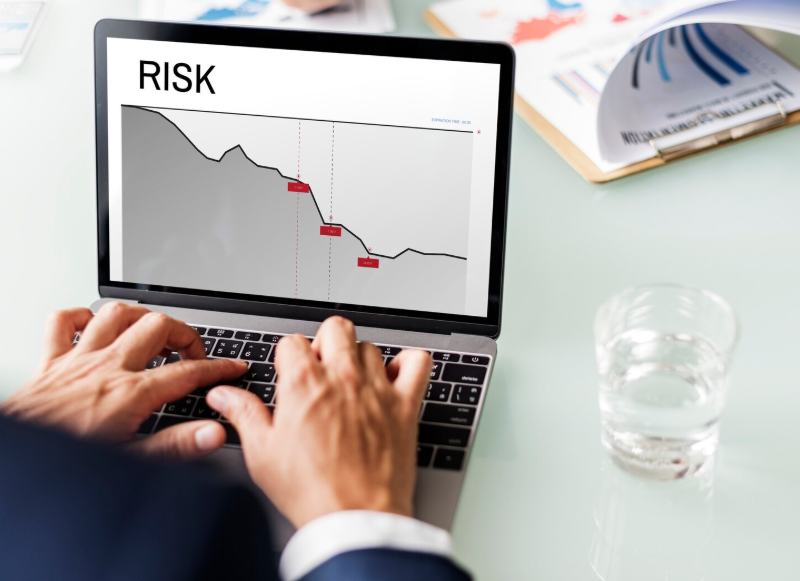
AI can predict certain types of financial risk exceptionally well. Whether it does so better than humans depends on what kind of risk is being measured and how those predictions are used.
Financial risk has always involved judgment. Lenders, investors, and institutions weigh uncertainty, probability, and trust when making decisions. Increasingly, those judgments are being delegated to AI systems that can process vast amounts of data at speeds no human can match.
The promise is clear: better predictions, fewer errors, and more consistent outcomes. The reality is more complex.
Where AI Outperforms Human Judgment
AI excels in environments where patterns repeat and data is abundant. Credit default prediction, fraud detection, and transaction monitoring are strong examples.
Machine learning models can analyze thousands of variables simultaneously, identifying correlations that humans would never notice. They don’t get tired, emotional, or inconsistent. Once trained, they apply the criteria uniformly across cases.
This consistency reduces some forms of bias and error. In large-scale systems, AI often outperforms individual human judgment simply by being faster and more statistically grounded.
For well-defined risks with clear historical data, AI has a measurable edge.
Explore AI-Driven Investing: What’s Automated and What Still Isn’t for context on automation limits.
The Limits of Historical Prediction
AI systems learn from the past. This is both their strength and their weakness.
When conditions change dramatically, historical patterns lose relevance. Economic shocks, regulatory changes, pandemics, or sudden market shifts can invalidate assumptions embedded in models.
Humans can reason abstractly about unprecedented situations. AI struggles without comparable data. Models may continue producing confident outputs even when the environment no longer resembles training conditions.
This creates a false sense of certainty. Accuracy on paper does not always translate to resilience in reality.
Read What Happens When Software Updates Faster Than Users Can Adapt for insight into model mismatch.
Bias Can Be Automated at Scale
AI does not remove bias by default. It reflects the data it is trained on.
If historical data contains structural bias, AI systems can encode and amplify it. Decisions may appear objective while reproducing existing inequalities.
This is particularly concerning in lending, insurance, and employment-related finance. When biased outcomes are automated, they scale rapidly and become harder to challenge.
Humans can question fairness intuitively. AI requires explicit governance to do the same.
Automation increases efficiency. It does not guarantee justice.
Check Why Money Advice Online Feels Conflicting on Purpose to understand bias in financial guidance.
Humans Excel at Context and Judgment Calls
Humans bring context, intuition, and moral reasoning to financial risk assessment. They can weigh nuance, intent, and situational factors that models often ignore.
A human underwriter might recognize a temporary setback or life transition that doesn’t reflect long-term risk. An AI system may see only deviation from a pattern.
Judgment matters most at the margins. When data is incomplete or ambiguous, human insight can prevent rigid outcomes.
AI predicts probability. Humans interpret meaning.
Hybrid Models Perform Best
The most effective systems combine AI prediction with human oversight. AI handles pattern recognition and scale. Humans provide interpretation, accountability, and ethical framing.
In these hybrid models, AI surfaces risk signals while humans decide how to act on them. This reduces error without surrendering judgment.
Transparency is critical. Humans must understand why AI flags risk, not just that it does.
Collaboration outperforms replacement.
See Why Financial Literacy Still Feels Intentionally Complicated for insights on accountability.
The Real Question Is Accountability
The central issue is not whether AI can predict risk better than humans. It is who is accountable when predictions are wrong.
AI systems don’t bear consequences. People do. When decisions affect access to credit, housing, or opportunity, responsibility cannot be fully automated.
Prediction without accountability creates moral hazard. Trust requires clear ownership of outcomes.
AI will continue to improve at risk prediction. Whether it should replace human judgment entirely is a question of values, not capability.